Showing posts with label spoon. Show all posts
Thursday, July 5, 2012
Coffee spoon
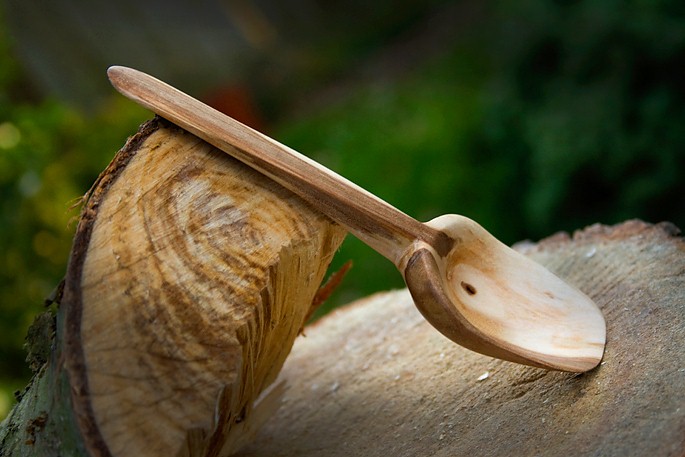
I made this spoon from a scrap of wood, it has the same volume as the measuring spoon that came with a pack of coffee.
Monday, August 22, 2011
More Staghorn sumach
Following on from the previous post I started work on the second half of the Sumach log. This time I started hollowing in the bowl from the outside of the log rather than the split face. This created a completely different look from the colouring of the wood. The patterning in the bowl and back of the bowl being especially beautiful.
Thursday, August 18, 2011
Something special - Staghorn sumach
Something special
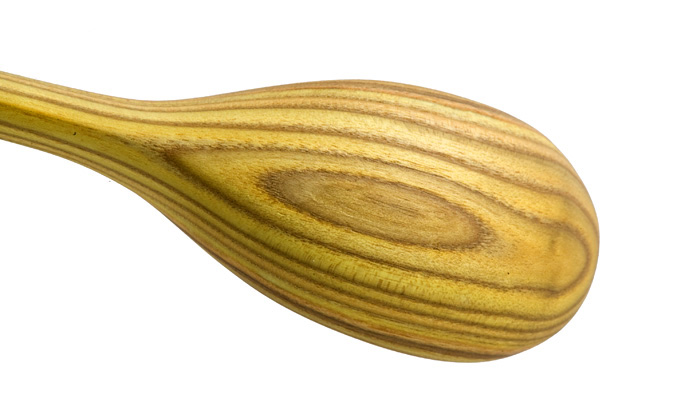
A friend gave me a piece of very unusual wood, Rhus Typhina, otherwise known as Staghorn sumach. The colours and the patterning are fantastic. The spoon was carved to show the beauty of the wood.
It was not easy to carve the wood as it was very easy to tear the wood fibres, also it was intended that there should be no symmetry in the carving so getting a balance was a challenge.
A friend gave me a piece of very unusual wood, Rhus Typhina, otherwise known as Staghorn sumach. The colours and the patterning are fantastic. The spoon was carved to show the beauty of the wood.
It was not easy to carve the wood as it was very easy to tear the wood fibres, also it was intended that there should be no symmetry in the carving so getting a balance was a challenge.
Labels:
carved,
spoon,
Staghorn sumach,
sumach,
wooden sumac
Saturday, March 12, 2011
Two tone birch spoon
One of the joys of working with natural materials is the unexpected. In the precious two posts we can see how birch looks when carved. But although I made this spoon from birch it has a two tone colour.
The colour comes from a fungus invading the wood as it starts to rot, the good news is that once worked and dried the wood remains stable and the fungus causes no problems in the future.
The darker wood here is the fungal growth
The spoon was made with a short handle for strength.
The colour comes from a fungus invading the wood as it starts to rot, the good news is that once worked and dried the wood remains stable and the fungus causes no problems in the future.
The darker wood here is the fungal growth
The spoon was made with a short handle for strength.
Sunday, March 6, 2011
Hornbeam spoon
Walking in my local woodland I see many Hornbeam trees which grow in tangled shapes or with long branches growing out to what seem unsupportable lengths. These are wonderfeul trees which give me much visual pleasure.
I had not attempted to carve Hornbeam because it is a very hardwood, traditionally used for canon ramrods, cogs, tool handles, chopping blocks and pulleys, in America it is often called Ironwood.
But having been offered some green hornbeam I decided to try something small, a spoon. Much to my surprise the wood was a joy to work and when finished the spoon is very smooth and comfortable to use.
The spoon is 165mm long.
I had not attempted to carve Hornbeam because it is a very hardwood, traditionally used for canon ramrods, cogs, tool handles, chopping blocks and pulleys, in America it is often called Ironwood.
But having been offered some green hornbeam I decided to try something small, a spoon. Much to my surprise the wood was a joy to work and when finished the spoon is very smooth and comfortable to use.
Spoon knives courtesy of Dorset Woodland Blades.
The spoon is 165mm long.
Tuesday, March 1, 2011
Spoon from Cherry
I was lucky to be invited to a greenwood working weekend at a private wood, the wood is owned by people who make high quality chairs from greenwood. There was a mix of experienced people at the weekend with a variety of skills and I hoped to learn some of their basic techniques.
I was kindly given some very fresh Cherry and I started work on a large, 15 inch, spoon. Cherry is a lovely wood to work with with beautiful colouring. I started on the log I was given by splitting lengthways and one half was axed into a rough spoon shape.
A Mora bushcraft knife was used to refine the shape and a spoon knife was used to hollow the bowl. Finally a light sanding finished the spoon.
I did learn an amazing amount from the greenwood workers and made some new friends at the same time, I will be back for more.
I was kindly given some very fresh Cherry and I started work on a large, 15 inch, spoon. Cherry is a lovely wood to work with with beautiful colouring. I started on the log I was given by splitting lengthways and one half was axed into a rough spoon shape.
A Mora bushcraft knife was used to refine the shape and a spoon knife was used to hollow the bowl. Finally a light sanding finished the spoon.
I did learn an amazing amount from the greenwood workers and made some new friends at the same time, I will be back for more.
Monday, February 14, 2011
Better axe and new spoons
I have seen people using axes to rough out spoons etc, they made the blanks faster and neater than I could, why?
The answer is that there are axes and there are axes.... ie the old axe that I found in a shed or the Gransfors Bruks (GB) Swedish carving axe.
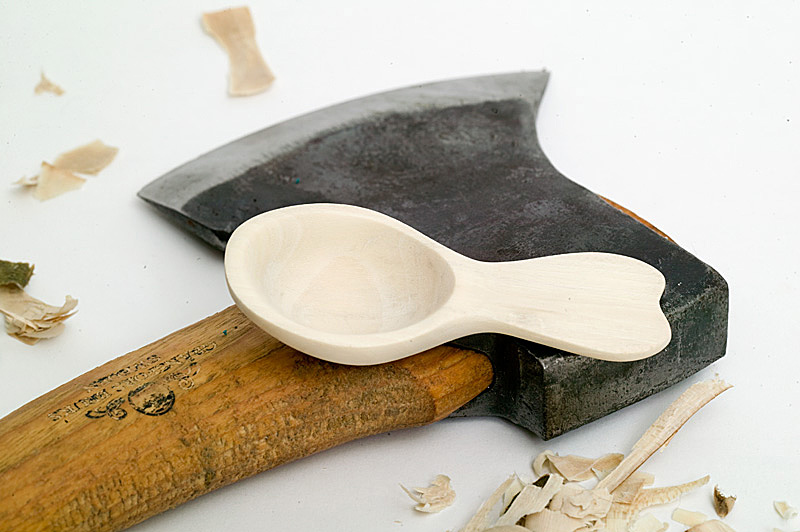
Having tried the GB axe the difference in use is huge, the extra weight carries the axe theough the wood. The design of the axe means that it is easy to see the cut as it is being made. The cutting edge is very sharp and can almost be pushed through the wood while making fine slices. luckily my birthay was close and a friend had a GB axe for sale add the the two together and I had a wonderful new axe.
So what to do with it, spoons I guess. A "windfall" of Birch meant I could head for the shed. A few days later I have new spoons ready to be oiled.
The answer is that there are axes and there are axes.... ie the old axe that I found in a shed or the Gransfors Bruks (GB) Swedish carving axe.
Having tried the GB axe the difference in use is huge, the extra weight carries the axe theough the wood. The design of the axe means that it is easy to see the cut as it is being made. The cutting edge is very sharp and can almost be pushed through the wood while making fine slices. luckily my birthay was close and a friend had a GB axe for sale add the the two together and I had a wonderful new axe.
So what to do with it, spoons I guess. A "windfall" of Birch meant I could head for the shed. A few days later I have new spoons ready to be oiled.
A pair of spoons for my wife and daughter carved from Holly
First carved spoon
While walking the dog I acquired a branch from a birch tree that was being felled because it was unsafe and leaning over a road.
So the time had come to carve my own spoon. I roughed it out with an old hand axe. Then I started to carve, it soon looked so bad I almost gave up. But by lunch time I had finished carving... almost. The bowl is hard to carve with a normal knife, I asked a fellow canoeist what he used and he lent me a spoon knife and I soon had a spoon :-)
the spoon is 9" long
Subscribe to:
Posts (Atom)